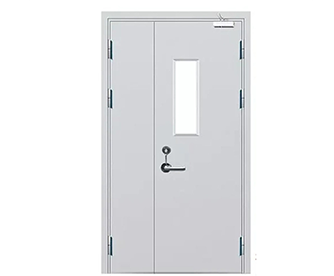




Product details
| Double Leaf Emergency Exit Doors | |
| Brand | Leadowvin |
| Filling Material | Fire ResistantHoney Core, Perlite, PU |
| Size | CustomizedMin.Door leafThickness50mm |
| Door leaf sheet | 0.8/1.0/mm galvanized steel sheet Or customized |
| Door frame sheet | 1.2mm galvanized steel sheet Or customized |
| Surface finish | Door leaf and frame powder coated finish. |
| Frame depth | 100mm*40mm*57mm or customized |
| Opening direction | Swing Inward / Outward |
| Color | RAL color system, could be customized as well. |
| Accessories | Lock,handle,hinges,door closer,panic bar and other as requested. |
| Vision Panel | With or without as requested. |
| Lite Frame | With or without as requested. |
| Louver | With or without as requested. |
| Application | Public and commercial area,Hotel, Hospital, etc. |
| Package | Inside:PE paper, wooden pallets. |
| MOQ | 100 Set |
Key Features
Showcased in a slightly ajar design to highlight its precision construction and seamless frame fit, this fire-rated metal door is engineered for scenarios requiring strict fire containment and building compartmentalization. It is a purpose-built solution for blocking fire spread between distinct building zones, with structural details optimized for reliable fire separation performance.
Fire Resistance
Offered with customizable fire resistance ratings ranging from 60 to 180 minutes, tailored to specific models and official certification standards. This robust fire rating effectively restricts cross-compartment fire spread, creating isolated safe zones within the building and slowing the spread of flames to buy critical time for evacuation and fire response.
Material
Crafted from high-durability metal—predominantly premium steel—with a specialized fire-resistant coating applied to all surfaces. The heavy-gauge metal core delivers dual performance: exceptional fire resistance to meet safety codes, plus high impact and anti-forced entry strength for long-term structural reliability.
Use Case
A staple installation for industrial facilities, stairwells, mechanical rooms, and service entryways—especially in areas housing valuable equipment or high-traffic building zones. It serves as a critical fire separation barrier, preventing flame and smoke migration between functional areas to protect property and maintain safe evacuation pathways.